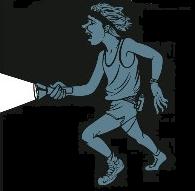
Winter running doesn't have to be like "life on a slip and slide." Whether you are a pavement pounder or Trail Nerd, screwed shoes are an inexpensive answer to your traction problems. If you like to run outdoors year-round and want Velcro-like traction on ice, slush, and snow...read on.
I started my running life in Spokane, Washington, where the Winter weather can be colder and much more snowy than here in Kansas City. And the snow would stick around and stack-up, too. It was not unheard of to see our first snow in October, and not have the snow and ice not melt until late March. After a few major snowfalls, the City would run out of budgeted funds to plow the snow. From that point on, the city would just plow the main streets, (but not the side streets), for the rest of the Winter. The side streets and sidewalks would become a "life & death" dangerous place to run.
Cars got around okay on the unplowed side streets (for the most part), due to the use of studded tires. So, it was only natural for us to adapt our shoes (and bicycle tires) to "studding," through various ingenious means. I don't know who or where the idea originated, but it had been around for quite a few years prior to my first attempt at it.
The first pair of shoes that I studded was in 1985. Remember Avia brand shoes? I used hex-head screws on a pair of Avia's with about 200 miles on them. I was awe-struck by the sudden increase in traction. I felt completely confident and secure on the packed snow and ice, from that point on. Nothing, (other than windchill) would stop me from running through the winter again, from that point on.
How is it done? The screws are screwed into the bottom of the shoe and it is the head of the screw that is visible, and it is the head of the screw that provides the traction. Hex-head sheet metal screws are used, because they have many "cutting surfaces" that grip the ice. After some initial misadventures with using screws that were a "tad" too long, I found out what many others had realized. By using #6 or #8 screws that are 3/8 to 1/2 inch long, you strike a balance of having screws that would not only stay in place, but they are not be felt by your feet. Usually, ten to sixteen (or so) screws per shoe, does the trick. Matt Carpenter has a great "how to" description of the procedure on
his site. There is also a direct link to his site at
trailnerds.com.
 Kelley Johnson gets screwed. Photo by Dick Ross, http://www.seekcrun.com/
Will it "hurt" your beloved running shoes? No, not really. But why not grab a used pair of shoes and try it out, and keep that pair "screwed" for the rest of their useful life? Sometimes, I will use the same pair of screwed shoes for two years, depending upon how many icy days we get.
 Photo by Casey Yunger
At the
Trail Nerds' annual February race, the "
Psycho Wyco Run Toto Run," we have actually employed the use of NASCAR-style pit stops with "shoe-screwing" stations for the uninitiated or non-believer. Non-believers may run the first loop of the race without shoe screws, but after watching their "screwed competition" literally fly by them on the course, they are more than willing to "get screwed" before going out for another loop.
So, forget hitting the "dreadmill" this Winter. Get your running totally screwed-up, for some real fun this season.
Happy trails,
Ben Holmes